1931 Kashmir Riots: 13th July 1931 saw an expression of extreme form of communalism from the majority community of the Kashmir valley - the Kashmiri Muslims. In the name of protest against the local king - Maharaja Hari Singh, the Kashmiri Muslims unleashed gruesome violence on the Hindus living in the Kashmir valley.
The Simmering: It was on June 21, 1931 that the YMMA (Young Man's Muslim Association), led by Sheikh Mohammed Abdullah, planned a public meeting at Khanqah-i-mohalla. It was a unique meeting because all Muslim leaders, irrespective of their schools of thought, assembled there. The meeting was addressed by Abdullah himself. He asked all Muslims to unite and demand for their rights. He also appealed to the Pundits to join hands with Muslims to seek redress of grievances as well as, demand for independence. All leaders swore in the name of the Holy book that they would remain faithful to the cause of Islam. Khawaja Saad-ud-din Shawl, Mirwaiz Moulvi Yousuf Shah, Mirwaiz Moulvi Hamdani, Chowdhury Ghulam Abbas, Agha Syed Hussain Shah Jalali, Khawaja Ghulam Ahmad Ashai, Munshi Shahab-ud-din, Sheikh Mohammad Abdullah, and Sardar Gohar Rahman were elected as representatives of the Muslims. Just when the meeting was about to be over, a well-built Pathan, Abdul Qadeer Khan, around 36-40 years old, rose up and delivered an inspiring speech, which was considered to be seditious by the State Government. He said, "The honor, respect, and relevance of the Holy Quran are dearer to the Muslims than the ruler ship of the world. Oh, Muslims arise! Time is near when you shall reply with stones, against the bricks. I warn you that your representatives and memorials cannot come to your rescue, now will these papers remove injustice and misery. You must stand on your legs and fight against the autocratic force. Even if you have no arms, you can fight with sticks and stones". He then pointed towards the Shergarhi palace of the Maharaja, and cried: "Demolish this edifice of injustice, cruelty, and subjugation". The listeners, who included leaders and the general public, were quite flabbergasted to hear such a speech. The crowds seemed so mobilized and motivated that they shouted 'Allah-o-Akbar' to manifest their support for Khan.
The Riots: The communal instigations, coupled with the arrest of Abdul Qadeer on charges of sedition, culminated into uninhibited loot, arson, murder, and extreme violence, against the ethnic minority community of Kashmiri Pandits. The Tribune, a leading national newspaper of that time, reported on the riots. It reported:
"At noon about a thousand Muslims gathered outside the Central Jail and there, in defiance of the law, arranged a meeting. The Police Superintendent ordered them to disperse but they refused. The Superintendent next ordered his constables to disperse the unlawful assembly. He had hardly given these orders when the mob which had swelled into thousands charged the small police force present with brickbats. The mob, inspite of police resistance, broke open the Jail gate and set a barrack on fire. The small prison guard fired and a few protestors died. About ten deaths are reported. A short time later cavalry Police and military force arrived. Alarm bugle was sounded.
Wild rumors spread in the city fast. The Muslims had already been observing a complete hartal since the morning but now the Hindu shops were closed. The mischief - mongers, realizing that all the forces, were centered around the Central Jail, a place 3 miles away from the city, decided upon raiding the houses and shops of the Hindus in the city. There seemed to be a well- organized conspiracy behind all this. The telephone and electric wires were cut off, and about six thousand Mohammadans raided Maharaja Gunj, looting and plundering the Hindus of the vicinity. Then followed harrowing scenes of incendiarism. No military or police aid reached those quarters for full two hours during which hundreds of Hindus had been looted and hundreds of them were injured with lathis and stones and incalculable damage was caused to Hindu property. Visitors were also not spared, they were severely belabored, and everything, even their shoes and turbans, were snatched away. Cars and buses were stoned and smashed. When the military and police force did arrive, it found the mob beyond control; and it was not before 7 p.m. that the havoc abated. Children, while returning from their schools, are reported to have been picked up and hurled in the river Jhelum. Hindu women were insulted and maltreated. The magistrates, military soldiers and police constables were stoned as a result of which many got seriously wounded. State buses carrying the soldiers were also stoned and their drivers grievously hurt. The police had to open fire at Maharajgunj also. A few casualties are reported from among Mohammadans. But inspite of all this the mob did not disperse and continued looting and wandering.
At last order was restored by energetic action of the State forces. Among the 15 deaths reported due to police firing almost all were Muslims. Many Hindus, including women were reported missing. In the night curfew order and section 144 were promulgated. Services of more military were requisitioned, as the city observed a complete hartal amidst the prevailing panic. In Amira Kadal, the Hindu shops were open as the military and police patrolled the city. All business came to a standstill. Colleges, schools, courts and offices remained closed. Except for the General Post-office all other post - offices were also closed. Besides 150 arrests, house searches were made to recover looted property. Unconfirmed reports of looting, plundering and belaboring of Hindus were received from Vicharnag."
Background: While the instigation was made out to be a spontaneous revolt against the subjugation by the Maharaja, close analysis of the situation brings out the real picture. Despite being autocratic and recalcitrant, Maharaja Hari Singh in his address to the chamber of Princes in London was unequivocal and unmistakable in his support of the growing demand for Indian independence which generated alarm waves for the British imperialists ever keen to perpetuate their hegemony over India and other Princely states. Plans were set afoot and conspiracies hatched to keep the Maharaja under the heel of pressure so that he would not dare thwart and impede the British strategies to meet the challenges posed to their vast sprawling empire by the Russian expansion in the belts of regions contiguous to their territories. On the chess-board of British geo-political strategies, Kashmir had notched up as a key-region and the bonafides of Maharaja harboring patriotic sympathies for the Indian independence became suspect and hence it was deemed strategic and highly expedient to pin him down in the communal tension that was covertly and overtly fuelled and heightened by inciting the Muslim majority against him as he was harboring a faith that was not Islamic. [2]
The communal riots that engulfed Srinagar (Kashmir) on July 13, 1931 were not spontaneous but the culmination of the prolonged intrigues by the British to violate the Treaty of Amritsar, which they had signed with Maharaja Gulab Singh in 1846, the founder of the political and geographical entity called the State of Jammu and Kashmir. However, their aim was to control the Northern Frontiers of India to keep an eye on the Russian advances and ethnic tribes that inhabited these regions. They also understood the importance of the Jammu and Kashmir in terms of guarding their rule in India. They were also aware of the fact that Himalayas defined the civilizational and cultural moorings of the Indian Nation and the State of Jammu and Kashmir, which holds the key to the Sanskritisation of India. They wanted the control over the Himalayas not to serve them but to subvert the authority of the ruler of the State as the seeds of the Anglo-Muslim alliance were already sown to implement the policy of divide and rule. This unfortunately was made operative on ground in 1931 in Kashmir.
Sheikh Abdullah was spearheading a movement against the Maharaja through the Reading Room Party and as such had engrossed focus and is said to have been picked up for the role of an agent and the same is revealed and established by the bunch of letters which were shown to Pandit Nehru (who felt shocked) by Rafi Ahmad Kidwai, the then Food Minister of India, when the stage was set for the Sheikh's dismissal in the wake of his fiery and treacherous statements questioning the irrevocability of Kashmir's accession to India.
The Reading Room Party as per its role-model in Kashmir politics was communal to the pulp, blood and bone as its bias against the Kashmiri Pandits was so pronounced that it prepared the ground for the blatant loot and murder of Kashmiri Pandits in July,1931. The battle-cry against them was set-off by the malicious and apocryphal propaganda of the typical Muslim brand that they had an absolute strangle-hold of the state services. The fact, to the contrary, was that the state services though very limited in number were domineered and monopolized by the Punjabi and Bengali Muslims and Hindus. Despite impeccable academic credentials, the Kashmiri Pandits were reluctantly recruited to the lower rung services for a mere pittance which was also stopped by the then powers in view of the mounting pressures on the Maharaja.
Lacking in the discernment of a modern mind, Sheikh Abdullah nursed a personal grudge against the Maharaja as he was refused a lectureship in an academic college, not out of religious bias, but because of his low academic merit. His competitor said to be a Kashmiri Pandit had a much brighter record than that of the tall Sheikh. Steeped in the culture of Aligarh Muslim University, the Sheikh with a mind fine-de-siècle and thinking communal straightaway sans any hesitation leapt to the conclusion that he was dropped because the Maharaja was a Hindu and his competitor too was a Hindu. It speaks volumes about the low mind of Sheikh Abdullah, who invested all his prowess and energies to metamorphose the Reading Room Party into a seminary of religious venom, hatred and animosity against the Pandits.
The Sheikh wanted the Maharaja to show him special consideration on grounds of educational and economic backwardness of the community he belonged to. Myopic in his views and outlook, he could not see and discover poverty, backwardness and deprivation prevailing in Kashmiri Pandits. His competitor was also a man from a poor and backward family. Despite economic disabilities and other inhibiting factors, the fact remains that the Kashmiri Pandits all through their chequered history and despite Muslim oppression have not broken their tryst with learning and education while the Muslims as a converted lot cultivating other priorities parted ways perhaps with no remorse with the tradition resulting in their educational backwardness which was perpetuated by the self- seeking Mullahs harboring repugnance to liberal forms of education. Credit must be given to the Maharaja that he firmly stuck to the rules and stipulations that were laid down for recruitment to the institutions of higher learning and did not relax, bend and flout them (as Sheikh did when in office) only to introduce the virus of mediocrity into the mainstream of Kashmir polity.
The Reading Room Party with Sheikh Abdullah as its moving spirit earned patronage and favors from the Muslim landlords, shawl tycoons, parochial mullahs and Muslim educated elite in government service. The landlords owing allegiance to the Maharaja patronized the Sheikh with a view to furthering their self-interests and increasing their clout with the ruler for more economic favors and concessions. It will not be out of place to put that the Sheikh, at the behest of Muslim landlords, was harnessed to collect funds for organizing a grand reception in honor of the Maharaja when he returned in 1931 from Europe where his wife had delivered a male child. In an attempt to make in-roads into the Muslim gentry he even accepted the convenorship of the Muslim Jagirdar Committee without any prevarication and outrage. The shawl tycoons were on the same wave-length and nurtured and pursued their interests by openly aligning themselves and making a common cause with the Muslim Jagirdars. The mullahs with obscurantism and intolerance as their guiding - star strained every nerve and fiber to keep the Muslim masses away from the light of education. The Sheikh sought and accepted their support and patronage and the fact that all the mullahs in the city of Srinagar lending their wholehearted support to the Reading Room Party which was presided over by the demon of Muslim bigotry testifies to its role-profile of inciting communal passions and awakening furies against their religious enemies. The Muslim elite in government service were ambitious of grabbing higher positions not on the strength of their merit and achievements, but on the basis of religion they espoused and held.
The Reading Room Party with mosque as its immediate extension emerged as a focal center for execution and fructification of the British intrigues against the Maharaja who for his anti-British stances was pressured and cowed down to hand over the complete control of the Gilgit Agency to the Britishers for their strategic ends. As per available evidences, Sheikh Abdullah who had started strutting the religio-political scene of Kashmir through his faculty of reciting the Quranic verses in a mellifluous voice in and outside the precincts of a mosque had forged clandestine linkages with the British Political Department which in essence was a receptacle of the British and Indian spies recruited by the British imperialists for garnering their political interests.
The plethora of letters that the Sheikh had written to the spies of the Political Department explicitly reveal his direct and definite bonhomie with the British operatives planning and executing measures and schemes to nurse and safeguard their vital interests in Kashmir. Sheikh Abdullah in the role of a British agent was first highlighted and thoroughly exposed in a very significant article published by the 'Blitz' in its issue of 24th April, 1965 and the same was reproduced verbatim by H.L. Saxena in his book 'The Tragedy in Kashmir'. The details in the article are comprehensive and are fully substantiated by the letters written by the Sheikh to his mentors whose patronage he sought and enjoyed at the threshold of his religio-political career till he emerged as a formidable force for the Maharaja to reckon with. [2]
The Sheikh motivated by and suffused with pan-Islamism of Dr. Iqbal and communalism of the brand of Aligrah Muslim university has been openly charged with being in regular correspondence and contact with B. J. Glancy, Col. C. W. Colvin and Lt. Col. L. E. Lang who had been deputed on a mission and had earned notoriety for spying operations in the Punjab and Kashmir. The mission that was said to be entrusted to the Sheikh and for which he was said to be roped in was to breed discontent and disenchantment among the Muslims of Kashmir and alienate them from the Maharaja and his power apparatus and also beat Kashmiri Pandits into submission for their vociferous and strident anti - British views and expressions.
It was notoriously known that the Sheikh had pro-Ahmadiya persuasions and links though Muslims as a flock detested them as deviants from Islam. It was through the British spies that the Sheikh was said to have formed a close rapport with the Ahmadiyas who had a well-cemented organization and were highly rich and affluent. In their political positions the Ahmadiyas were known as British lackeys and footmen.
For being affiliated with the Britishers and also for the tonnes of money they spent in Kashmir for furtherance of their mission and also for Muslim welfare by way of instituting scholarships for Muslim boys the Sheikh established a tie - up with the Ahmadiyas operating in the Punjab where they were equally suspected and abhorred by the orthodox Muslims. His bonhomie and nexus with the Ahmadiyas was an open secret and there were lot many groups and individuals who not only resented, but bitterly opposed his political and religious affinity and contacts with the Ahmadiyas. The Sheikh perhaps at the bidding of his masters not only invited but paved the way for the Ahmadiya intervention in Kashmir. Crafty as the British spies were, they doled out an impression to the Maharaja that the Ahmadiyas were their stark enemies and warned him of their anti - state activities and designs, but aware of the nexus between the Britishers and Ahmadiyas, Maharaja Hari Singh in doldrums, despite his brave face, dared not devise and execute stern measures to thwart and put an end to the Ahmadiya intervention in Kashmir.
Ahrars with their progressive camouflage were on the same wave - length with the Ahmadiyas in their anti -Maharaja and anti-Hindu threats and agitations. Apparently votaries of Hindu - Muslim amity, the Ahrars through the dispatch of their Jathas and groups into the State created conditions for loot and murder of Hindus. Stridently anti - Maharaja and seemingly anti - British, the Ahrars objectively contributed to the British design of fomenting and proliferating the communal conflicts and tensions to de-stabilize the Maharaja to further the imperialist designs and machinations. Kashmir practically marked a reversal of their policy of inter-communal peace and amity as they vigorously fanned and fuelled Muslim communalism to incredible limits. Their commitment to the congress as a secular organization was so fake and tenuous that they deserted the congress ranks to join the Muslim League or formed their own outfits in the wake of M. A. Jinnah's declaration of Pakistan as the separate home-land for Muslims. The Reading Room Party was closely knit with Ahrars and basked in their patronage and was maintaining a regular liaison with them for political and religious mischief. The Ahrars essentially were communal though they externally donned secular robes. They had hatred for the Maharaja as he was a Hindu and had Muslims as his subjects. Their vigorous programme of dispatching groups (Jathas) into the state was also perceived to counter-act the political hold that the Ahmadiyas were fast gaining in Kashmir through lavish spending.
The Punjabi Muslim press under the lavish patronage of the British imperialists launched a propaganda blitz against the Maharaja who was denounced as a heretic with no right to rule over Muslim masses. The tone and tenor of the published material was blatantly sectarian and communal inciting the Muslims to launch a crusade against the Hindu Maharaja and his Hindu administration. The Muslim outlook' and 'Inqalab' as the two front-ranking dailies published from the Punjab fabricated and disseminated wanton lies and half - truths about Kashmir conveying the same theme - song of incitement to revolt against the Hindu ruler and his administration. The dailies couched and soaked in the language of fire and brimstone and more than most communal venom were extremely popular with the members of the Reading Room Party which was committed to the working out of the assigned task of inciting the communal passions and igniting the communal fires to pave way for direct British intervention in Kashmir affairs.
As per the noted historian M. K. Teng, "Journals and akhbars issued from Lahore and elsewhere taking up the cause of Muslims were patronized by the British to browbeat the Maharaja."
The inquiry commission: An inquiry commission under Sh. Barjor Dalal submitted a report on the riots of July 1931. As per the compilation of this report under the title "Bajror Dalal's report of the Srinagar riot enquiry committee - 1931", authored by Shailender Singh Jamwal, the Srinagar riot of July 13, 1931 was the desired outcome of the intrigues in which the British indulged from 1847 but Maharaj Gulab Singh was the astute statesman to swim over the unwanted tides. Even his successor, Maharaja Ranbir Singh managed to act as the statesman to outwit the British ploys of getting any foothold in the State to control its political set up. But Britishers were keeping a keen eye on the affairs of the State and during Maharaja Pratap Singh’s reign, and they managed to subvert the political and administrative authority of the Maharaja.
By the time, Maharaj Hari Singh, the progressive ruler of the State ascended the throne on September 23, 1925, after the demise of his uncle, Maharaja Pratap Singh, the unwanted developments had reached the critical mass. The British exploited the fact that the State had a Hindu Maharaja ruling the Muslims. It was a God-sent opportunity for them to divert the attention from the effects of the economic turmoil in the rest of India due to the economic depression in Europe as Indian economy was linked to it. They raised the bogey that the economic empowerment of the Muslims was blocked by the Hindu Maharaja to keep them in perpetual slavery. The report examines the eye witness accounts and different shades of opinion to analyze as to what went wrong that changed the social and political dynamics of the State forever. The Maharaja had been astute enough to promulgate the hereditary State subject definition. This legal enactment was introduced to checkmate the intrusion of the Britishers to interfere in the State and restricting their entry. The former Maharaja was also well aware of their mischief to subvert the political stability of the State as it was during his time in 1924 that Silk factory workers in Srinagar raised the banner of revolt.
Maharaja Hari Singh was not the favorite of the British rulers as he was well aware of the deployments world over. He had made his mind clear about his intentions about the role the princely states should play to uphold the Indian nation. This did not go down well with the imperialist British. The report extensively discusses that how the British instigated the Muslim populace of Punjab and therefore, All India Kashmir Muslim Conference came into existence in 1928. It members had nothing to do with Kashmir but the element of pan-Islamism was instigated. Though the Conference started pleading the case for the Muslim education in the State but “its real object was to secure for the Muslims of British India, especially of the Punjab, the right to be appointed in the State services so long, at least as the Muslims of the State remained unqualified.”
Both the provinces of the State were kept under boil by the British. In Jammu, Young men’s Muslim Association was set up, it acted on the lines of Muslim Reading Room party of Fateh Kadal, Srinagar. The brain behind the disruptive activities of these formations was Wakefield, the officer of the political department of the Government of British India. The visit of the Muslim Association to Kashmir and interaction with the Reading Room Party was made to infuse a sense of coherence to instigate bigger trouble for the Maharaja in 1931.
The trial of Abdul Qadir, a non-state subject cook of the British officer and his seditious speech that set the communal frenzy in motion in Srinagar has been clearly discussed in the book. One thing that makes this publication important is that it exposes the denial of communal ruling elite regarding the atrocities on minorities of Kashmir that grabbed the power in 1947 by making the Maharaja abdicate the State under pressure from V P Menon under the advice of Vallabhai Patel. The communal riots have been well documented in this report and help to see the present State of political turmoil in perspective. Shailender Singh Jamwal has aptly summed up the state of Hindu minorities in Jammu and Kashmir on July 13, 1931 who observe this day as the black day. He writes, “The people of Kashmir and their political organizations barring Kashmiri Pundits observe this day as martyr’s Day because Dogra troops resorted to firing in Kashmir in which ten people lost their lives. While many in Jammu, including Kashmiri Pundits observe this day as a Black Day as their business establishments in Kashmir were plundered by the members of the majority community; moreover, their dignity, honor and lives were endangered. Since then, both the major communities of the State have been living a poles apart. This event has divided the people of the State on religious, regional and ideological basis and does not allow them to sink their differences.”
M.J. AKBAR ON QADEER : M.J. Akbar's views on the Qadeer episode are replete with a penchant for investing a non-entity with a heroic hue and aura. Qadeer, to him, seemed to 'discover a new-identits when he was in Kashmir as 'a cook in the retinue of a European'. What was the identity that he discovered in Kashmir which otherwise in Peshawar he was lacking? How was it that he suddenly found a new identity in Kashmir? Akbar hails Qadeer's oratory as 'more spicy than his cuisine'? But, dismaying as it is, M.J. Akbar with all his calibre has viewed and assessed the entire episode in the light of oratory and cuisine and has missed import of the episode as part of a bigger game that the British played in accompaniment with their agents who were roped in and harnessed to fulfill and execute their geo-political objectives Had he inquisitively probed deeper, he would have discovered a sinister intrigue hatched by the BritishAhmadiya-Abdullah nexus to destabilise the Maharaja for his anti-British postures and in the process would have known that Qadeer was only a pawn to get things to a crisis - point paving way for direct British take liver of the state by dislodging the Maharaja. Qadeer's oratory was doctored, packed with communal poison and was inflammatory. His arrest and trial let loose communal frenzy which was directed towards the Kashmiri Pandits like an artillery barrage.
Feb 1931 Kanikoot massacre : Quite Often we forget that 13 July were not in isolation & biggest massacre ever happened in its ambit.Kanikoot is a village located few miles uphill from Nagam in Chadoora tehsil of Budgam. Nagam is a big village and old tehsil headquarters. I had sizeable Pandit population before 1990.
Two Kashmiri Pandit families lived in Kanikoot village in 1931 - those of Pt. Zana Bhat and Pt. Janki Nath. Not long ago, Kanikoot used to be a dense forest. Ancestor of Zana Bhat had come to the village and settled there after clearing the forest area.
Through sheer hard work and enterprise he acquired wealth. Since this huge tract of land could not be cultivated on his own, he encouraged Muslim peasants from other places to come there for tenancy.Many villages in Kashmir have come up this way during the past three centuries in areas close to forests. Pt. Janki Nath and his mother lived 100 metres away from Pt. Zana Bhat's house. Pt. Zana Bhat's family was pioneer in horticulture development in the area. Even in 1931 they had big fruit orchards. The family did not deal in moneylending business, as has been claimed by some uninformed people. For his affluence, Pt. Zana Bhat commanded prestige and authority in the area.
Watakul was a neighbouring village and had no Pandit family as its residents. Kanikoot tenants were on good terms with Pt. Zana Bhat. In February 1931 nine members of Zana Kak's family were axed to death by some people from the adjoining Watakul village.
Did this incident had any link with happenings of 13th July? There are no clear answers. The British agencies were already active and 13th July was the culmination of the nefarious policies they were pursuing to destabilise Maharaja Hari Singh. Pt. Zana Bhat's family had no problems with their tenants of Kanikoot nor did the family engage in usury. Even if it is assumed that the family had personal enmity with some family/people from Watakul village, could this have invited retribution of this magnitude? How could ordinary peasants under autocratic rule take such an action? How many such type of incidents have occurred in Kashmir during the proceeding decades? The circumstantial evidence points to a conspiracy. A few days before the incident, the conspirators had hatched a conspiracy and devised the modus operandi of targetting Pt. Zana Kak's family.
On the fateful night, the conspirators reached Pt. Zana Kak's house. They called the sleeping family members to open the main door, pretending they had some urgent work. It seemed these people were quite familiar to the family and the latter trusted them. The conspirators hacked nine members of the family, including ladies and children, to death with an axe.
Few members of the family, including Prem Nath who were studying in Srinagar survived.The lone survivor in the massacre was a boy, who was sleeping with a Gujjar servant that time. After hacking their victims to death, the conspirators set on fire the top floor of the house to destroy the evidence.
The loyal servant carried the lone survivor of the family with him and escaped through a window near the main staircase.Many of the bodies were half burnt. The servant went to a neighbouring peasant family and narrated the gory happenings.
The following morning the servant in utter grief cried hysterically. The Gujjars from the surrounding areas too reached the massacre spot. Same evening Janki Nath and his mother left the village.So neatly was conspiracy hatched that it seemed even the Patwari of the area, who happened to be a Kashmiri Pandit, was in league with them orhad been bribed otherwise.
The Patwari prepared a fictitious report, attributing the incident to a case of 'Atish Nagahani' (accidental fire). But for the evidence of the loyal Gujjar servant, the Patwari's report may have well been accepted by the government.After all the victims, and the Patwari belonged to the same community! The incident sent shock waves among the Kashmiri Pandit minority.
Pandit population all over the Valley observed fast for two days, both as a mark of protest as well as to express their grief over the massacre. The trial was conducted by the Chief Judge, Sh. Arjan Nath Atal. Two of the 13 accused died during the period of trial. Besides the evidence of the lone survivor and the Gujjar servant, two of the accused turned approvers. It was established that the peasants of Kanikoot had no knowledge about the conspiracy,neither they stood as witnesses. They also did not demonstrate any sympathy with the conspirators.
Pt. Janki Nath, the head of the other Pandit family also excused himself from favouring either of the party and deposed that at the time of massacre he was in deep sleep.Four days after the incident, Pt. Gopi Nath Bhat of village Woodru, Shoolipora accompanied Pt. Mahand Joo, press reporter of Daily Martand, from Srinagar to Kanikoot.
He recalls, "when we reached Kankoot, the village looked desolate. The victims had no one to weep for them".
The judge sentenced the 9 accused to death by hanging in 1933. All the accused belonged to Watakul village. Neither the Muslims nor the Pandits interfered in the trial nor did they politicise the matter and allowed the law to take its own course.
Even the Muslim Conference which led 13th July agitation did not sympathise with the conspirators nor arranged any relief for the families of the accused.Pt. Zana Bhat's three grandsons - Prem Nath, Radhakr-ishnan and Jia Lal survived as they were in Srinagar at the time of massacre. In 1965, when Pak saboteurs entered Budgam, Radhkrishan, that time the village Chowkidar, was kidnapped by the saboteurs and was tied to a tree with rope. Locals rescued him.
This again endorses the view the Kanikoot peasants had no enimity with Pt. Zana Bhat's family. Radhakrishnan continued to function as village Chowkidar till 1990. All this points that the Kanikoot was a conspiracy, the exact contours of which remain unidentified.
Summary Note
By any Chance if someone thinks that 1931 was a secular Kashmiri uprising & KPs in particular were helping the Muslims Brotherhood to revolt against Maharaja then by every chance one should question the intent of Communal Riots by same forces.
Is this Politics of Balance or an appeasement of false HOPE which Gandhi sold to INDIANs costing it many partitions and lots of life.

 The atmosphere was such that he got the opportunity of studying many things, especially the unhappy events which were then happening in the country. Bit by bit, his mind was being drawn to the political situation of the country. Young Chandra Shekhar was fascinated by and drawn to the great national upsurge of the non-violent, non-cooperation movement of 1920-21 under the leadership of Mahatma Gandhi.
 To protest the massacre and demanding the liberation, various popular activities sprouted up throughout the country. While participating in one of these movements, Chandra Shekhar was arrested when he was just 16 years of age.
 The leaders of the party toured extensively in the land and collected a lot of money but it proved inadequate for the purposes of the contemplated actions. The leaders of the party sought the help of Azad. A secret commission was called and it decides in favour of dacoity of Government treasure. Verily it was a verdict and the men of the party started preparations for committing it somewhere. Result was the famous Kakori Case. Kakori is a railway station near Lucknow in Uttar Pradesh. The idea of the Kakori train robbery was conceived in the mind of Ram Prasad Bismil, while travelling by train from Shahjahanpur to Lucknow. At every station he noticed moneybags being taken into the guard�s van and being dropped into an iron safe. At Lucknow, he observed some loop holes in the special security arrangements. This was the beginning of the famous train dacoity at Kakori.
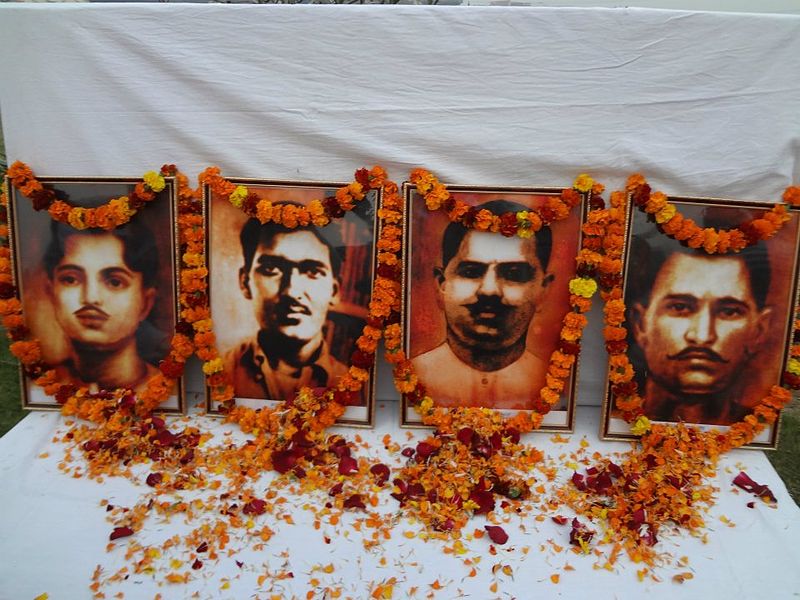 After this event, the Government let loose a period of repression, search and arrests in the country. Many revolutionaries were arrested. After deliberations of 18 months, the court awarded punishments. Four of the members –Ramaprasad Bismil, Ashfaqulla Khan, Rajendra Lahiri and Roshan Singh were sentenced to death; the others were given life sentences. Sad was the outcome of this whole operation for it lost its best and powerful men in the scramble. However Azad remained at large, never to be captured by British, and to continue doing the revolutionary struggle. During the next phase of the struggle he menored a whole team of revolutionaries to shake the British Raj
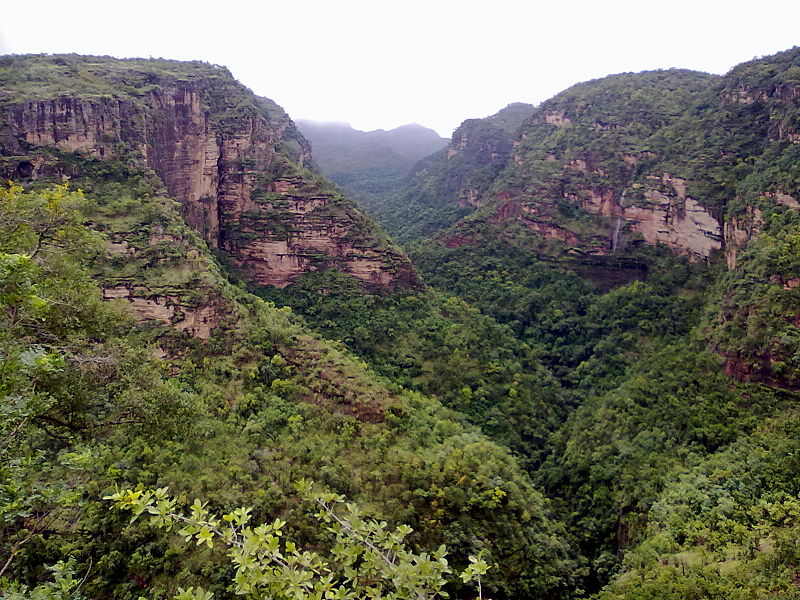 Taking a circuitous he traveled across the trackless jungle of the Vindhya valleys on foot. This was the hardest period in his life and he had to undergo many hardships. The sun scorched him by day and the cold chilled him by night. He was often at a loss to obtain food for himself.
 The henchmen of the British Government were on the track of Azad. When a secret conference was being held between these men in a private lodging, the police all of a sudden rushed to the scene. A regular scuffle ensued and a party member named Shri Shukla met the assault single handed and was killed on the spot. Others, however, very skillfully managed to escape. Azad had in mind to teach a lesson to the intruders and on this particular occasion, he felt an overwhelming temptation to shoot but was held back.
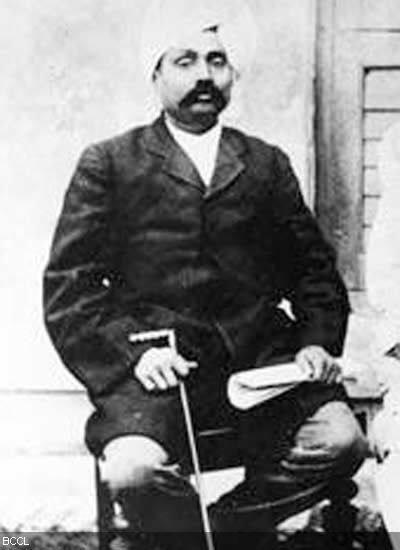 Hardly, had the leaders time to arrange their regional teams in order, than a serious situation arose in the country. Lala Lajpatrai, the ‘Lion of Punjab’ led a strong protest against the Simon commission in Lahore. The police with inhuman brutality charged the leaders with lathis. Lalaji was struck. It proved a deadly blow and later lies succumbed to his injuries. While dying he said, “The blows I got are but the death-knells of the British Empire in India”.
 As previously arranged, this operation was directed by Chandrashekhar Azad, Rajguru, Bhagat Singh and Jaigopal. All these chiefs remained in hiding behind the Police Office in Lahore. As soon as Scott and Saunders came out, a volley of bullets struck them. Saunders was killed and Scott saved himself. Thus, Lalaji’s death was avenged.
 Once again, Azad was never captured. Vigilant police of the British rule in India were on the look out for Azad. All attempts to catch him proved fruitless. There are numerous stories related to Azad�s hide and seek with British Raj during these days. He was an expert in using camouflage, which he used on various occasions. His stories of escaping the British police became the talk of common household. Police were bewildered and tired.
 Anyways, police laid down a cordon with a troop of 80 sepoys to surround the Alfred Park and started fire. He only had a short range pistol with him and limited bullets. For quite sometime he held them at bay single-handedly with a small pistol and few cartridges.