Translate

Thursday, August 15, 2013

British MPs invite Narendra Modi to speak on 'The Future of Modern India'

Narendra Modi, the Indian nationalist leader tipped to be the country's next prime minister, has been invited to speak to British MPs on his vision for India's future.

Narendra Modi hailed as India's next prime minister

Until last year Mr Modi, chief minister of India's Gujarat state and a senior leader of the nationalist Bharatiya Janata Party, was shunned by the British Government and banned from entering the United States because of concerns over his role during the 2002 massacre of Muslims in his state.
               Modi is a divisive figure in India, his popularity has steadily grown in response to rapid development in Gujarat and his reputation for good governance.
His landslide re-election victory in Gujarat last year propelled him to the head of his party's campaign for next year's general election, and its expected candidate to be India's next prime minister.
                  Last year, Britain's High Commissioner to India, Sir James Bevan, signalled a u-turn in Britain's relations with Gujarat by meeting Mr Modi in Ahmedabad, the state capital.
His international rehabilitation took another step forward last week when Conservative and Labour 'Friends of India' groups at Westminster sent invitations for him to visit Westminster and speak to their MPs.
Narendra Modi                        Siddarth Nath Singh, a fellow BJP leader, said the invitations marked a recognition that the West had made a mistake in shunning Mr Modi earlier.
                                                             "The West has accepted the growing clout and popularity of Narendra Modi and are trying to correct the mistake done by them some years ago by barring Modi from visiting their countries," he said.
                       "Modi has never applied for a visa to any Western country and it's them, who have understood that Modi could be the next Indian prime minister.
                                                               Businessmen in the West have seen the kind of development in Gujarat and have no choice but to engage with Modi. It's up to Modi to accept or reject the invitation," he added.
                        Mr Modi has yet to accept the invitations, but he voiced his gratitude on Wednesday and said he was "thankful to British MPs for their invites in the spirit of dialogue and engagement."

Wednesday, August 14, 2013

I will not criticize NDTV for ‪NidhiRazdan‬'s interview of the British MP.

Yes entire Social Media is cursing NDTV. But they are just doing their job. What else would you expect a channel owned by Congress Minister to do?

In fact I respect the way they showed this news. They could have hidden it or censored it. They didn't.

So despite Nidhi's desperate attempts to block Visa for Narendra Modi to UK, wherein she literally begged the MP to not give Visa to Modi, i think we should appreciate that they dared to show it on air.

They have set quite low standards for ‎PaidNews‬. So whatever good they do should be appreciated


Sunday, August 11, 2013

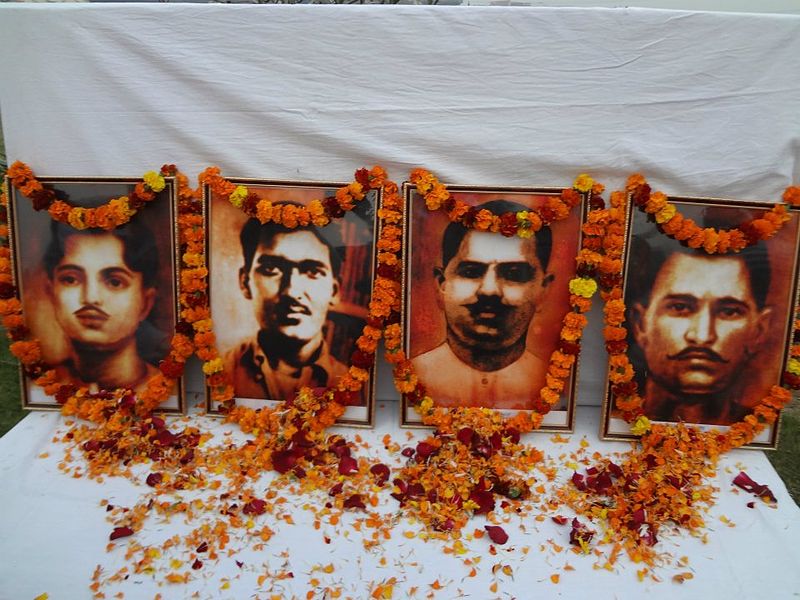
Remembering Youngest Indian Revolutionary : Khudiram Bose

  • BIRTH AND EARLY LIFE

Khudiram Bose was born on 3rd Dec 1889 in Habibpur, Medinipur to Laxmipriya Devi and Troilokyanath Bose. The Bose couple had yearned for a male child but unfortunately did not live long enough to enjoy their happiness. They unexpectedly died when Khudiram was just six. 
                                                   The boy's elder sister Anurupadevi and his brother-in-law Amritalal had to shoulder the responsibility of bringing him up. He had to move on to Tamlook where he was admitted to Hamilton school. Like any other boy he was interested in reading detective novels and loved to play the flute.
                               It was in his school days that he was inspired by the activists, Satyendranath and Gyanendranath Bose who headed a secret society to campaign and fight against British supremacy.

  • A BORN PATRIOT
A born patriot, even at the age of seven or eight years, Khudiram Bose thought, 'Bharat, our country is great. Our ancestors say that this has been the home of knowledge for thousands of years. Why, then, are the red-faced British here? Under them, our people cannot even live as they wish. When I grow up I must somehow drive them out.'
                               These thoughts ruminated in his mind all day. Thus whether he read a book or sat down to eat he would see a red-faced, green-eyed Englishman glaring at him. This caused strange pain to his heart.
                                                                                                        Even at that tender age, Khudiram had thought so deeply about the country's freedom. But how was he going to achieve it ? This was haunting him all the time. How could he perform his duty unto the country successfully?
When engrossed in this, one day Khudiram heard the cry 'Vande Mataram (I salute You O Motherland)' and 'Bharat Mata Ki Jai (Victory to Mother India)’. He was thrilled by these cries, his eyes glowed and he felt elated.
  • DON'T DARE TO TOUCH ME
 It was February 1906. A grand exhibition had been arranged at Medinipur in Bengal. The intention was to obscure  the injustice of the British then ruling India, through articles like pictures and puppets which could create the impression that the British rulers, though foreigners, were doing much to help the people of India. There were big crowds to see the exhibition.
                                                       Khudiram was distributing handbills having the title 'Sonar Bangla' to the people. It carried the slogan ‘Vande Mataram'. In addition, the true purpose of the British in putting up the exhibition was also exposed. The various forms of British injustice and tyranny were also explained.  
Among the visitors to the exhibition, there were a few loyal to the King of England. They were opposed to the people who exposed the injustice of the British. Words like ‘Vande Mataram', 'Swatantrya' (freedom) and 'Swarajya' (self-rule) were like pins and needles to them. They tried to prevent him from distributing the handbills. Their eyes red with anger, they glared at him, rebuked and frightened him. But ignoring them Khudiram calmly continued his task. When some people tried to capture him, he made a smart escape.
                      Finally a policeman caught hold of his hand and pulled the bundle of handbills. But it was not so easy to catch him. With a jerk he freed his hand,  then swinging his arm forcefully struck the nose of the policeman. Snatching the handbills he warned the policeman, “Don't dare to touch me ! Let me see how you arrest me without a warrant".
                                         The policeman who had received the blow rushed forward but Khudiram had disappeared in the crowd.
As people burst into cries of ‘Vande Mataram' the police and loyalists of the King were bereft of words and also humiliated.
         Later a case was filed against Khudiram but the court set him free on the ground of his tender age.
  • MARTYRDOM 
A trial was carried out for two months on this Muzaffarpur bombing and other charges of bombing carried out by him. Although the leading Calcutta advocate Narendra Kumar Basu defended Khudiram's actions in defence of his motherland to his best, Khudiram was sentenced to death for the murder of women and children. The sentence was carried out, and he was hanged on August 11, 1908. Legend says that as he was hanged he was still smiling.
  • AN INSPIRATION
Not only did Khudiram himself became immortal, but he also inspired others by his sacrifice, to become immortal. In course of time, thousands of young men and women followed in his footsteps. While Kingsford had to quit his post, the British had to quit Bharat itself.


Thursday, July 25, 2013

India needs a Syria strategy


Amidst confusing, even contradictory, reports coming out of Syria, it is clear that the world is poised on the brink of a greater conflagration than previously envisioned - a regional war distinct from the US-NATO action in Iraq and Libya, with wider ramifications. Major world capitals have decided their stand vis-à-vis Syria, Lebanon, and Iran. New Delhi is playing ostrich, but may again abandon traditional friends for imperialist allies, without factoring in critical national needs like oil and gas, and the impact a possible blockade of the Strait of Hormuz could have on our energy security.
Moscow and Beijing, meanwhile, are preparing to resist western unilateralism. Reports suggest that on May 29, President Vladimir Putin ordered Russian military forces to move from local war to regional war operational status and be ready to escalate to large-scale war if the United States or European Union enters the Syrian civil war. On May 24, Moscow undertook a ‘surprise alert exercise’ involving four regiments of S-300 troops combining 8,700 personnel, 185 warplanes and 240 armored vehicles, which are now positioned to enter the Syrian war zone if necessary. Russia’s Foreign Intelligence Service and Zaslon Special Forces units have also been deployed; these developments merit serious attention.
 
The stakes are high for Moscow. Besides the Russian naval facility at Tartus, a 30,000-strong Russian population is married to Syrians, and the Russian Orthodox Church has an interest in Christian communities in Syria. But most importantly, the plot to destroy Syria’s Shiite leadership involves a sinister design to use Syrian territory for a natural gas pipeline from the Gulf States to the EU, breaking Russia’s stranglehold on European energy supplies. Qatar, with the world’s largest gas-field, has reportedly invested US$ 1bn to 3bn in the anti-Assad fight.
 
Fiona Hill, senior fellow, Brookings Institution, notes that during the 2009 Chechen crisis, President Basher al-Assad helped President Putin by preventing many groups supporting the Chechens, including a Syrian ethnic group originating in the Russian North Caucasus, from collecting money and sending recruits there.
 
Hence, after the European Union decided on May 27 to lift the arms embargo on Syria rebels, Russia moved its naval fleets into the Mediterranean. On May 30, President Assad claimed that Russia’s had delivered the first batch of advanced S-300 missiles to protect his regime. These have a range up to 200 kilometres and the capability to track and strike multiple targets simultaneously; they are expected to limit Israel’s ability to strike Syria. Moreover, with Russia’s backing, Iran has reportedly brought its military assets close to Israel’s borders in Syria and Lebanon.
 
Reuters reported on May 5 that the United Nations independent commission of inquiry had evidence that the Syrian rebels had used chemical weapons (banned under international law), including nerve gas sarin, in the combat. There is no evidence that government forces used chemical weapons, according to member Carla Del Ponte.
 
Dr Christopher Phillips, associate fellow, Chatham House, observes that London wrongly believes that ending the arms embargo will compel President Assad to negotiate during the Geneva peace talks in June (which may not be held). Britain feels that ‘moderate’ rebels are losing ground to radical jihadis like the Al Qaeda-affiliated Jubhat al-Nusra, and must be beefed up. But each time the rebels have made gains, the Assad regime has received arms, financial aid and even fighters from Russia, Iran and Hezbollah. Hence Assad has no reason to compromise as his inner circle remains faithful.
 
American journalist Stephen Lendman points out that lifting the EU arms embargo is a fake, as the rebels have freely received arms since Washington’s began its regime-change war on Syria in 2011. The proposed Geneva II peace talks are also a sham. British Special Forces entered Syria in February 2012 to guide the rebels the way Libyan rebels were helped to overthrow Col. Gaddafi. Al-Qaeda-affiliated terrorists who helped overthrow Gaddafi were airlifted into Syria to topple Assad last November.
 
In fact, Moaz al-Khatib quit as president of the Syrian National Coalition precisely because the group is controlled by outside powers, read Saudi Arabia and Qatar, the frontline western proxies in the war. The conflict has engulfed large parts of the region and could ultimately impact Europe, for when the Muslim citizens of European nations fighting with the radicals in Syria return home, they will take the ‘revolution’ back with them.
 
Sociologist Mahdi Nazemroaya says Turkey, Israel, and Jordan are siding with the West. Turkey has done reconnaissance for NATO in Syria, and hosts NATO Patriot missiles aimed at Syria (which can be deployed against Iran and Russia), and helps the anti-government forces. Israel has sent Mossad into Syria and built facilities in the Golan Heights to aid the insurgency. Both countries repeatedly threaten Syria and push for NATO intervention and no-fly zones.  
 
Lebanon is split between the pro-Syrian Hezbollah-led March 8 Alliance and the anti-Syrian Hariri-led March 14 Alliance. Washington is trying to cripple Hezbollah; hence Hezbollah has joined the fight on the Syrian side of the Lebanese-Syrian border. The March 14 Alliance has been sending weapons and funds to the insurgents from 2011; in November 2012, evidence surfaced that Hariri party member Okab Sakr was behind weapons shipments to Syrian insurgents in coordination with Turkish and Qatari intelligence officers.
 
Hezbollah joined the fighting when Syrian rebels began attacking Shiite villages on both sides of the Lebanese-Syrian border and attacking Shiite shrines in Syria. After the mosque where Hujr ibn Adi Al-Kindi and his son were buried in Syria was defiled, Hezbollah and Iraqi Shia rushed to protect the Sayyidah Zaynab Mosque. Religious minorities have been systematically targetted by the rebels (Druze, Maronite Catholic Christians, Melkite Greek Catholic Christians, Greek Orthodox Christians, Armenian Orthodox Christians, Syriac Orthodox Christians, Alawites, and Twelver Shiites) as also ethnic minorities (Armenians, Assyrians, Kurds, and Turkoman).
 
For Iran, Syria is a “redline”. After the fall of Saddam Hussain, Washington said Iran and Syria were its next targets for regime change. So Tehran and Damascus supported all American opponents in Baghdad (Shia or Sunni) to keep the country unstable. Tehran has warned it will intervene militarily if US-NATO attack Syria. Beijing has been silent, but it is aware that Syria is part of Washington’s eventual move against it. New Delhi must study the emerging instability across the entire Gulf region and prepare its responses

Wednesday, July 24, 2013

Jawaharlal Nehru, Indira Gandhi, Rajiv Gandhi ads alone cost UPA-2 Rs 53 crore

The Nehru-Gandhi family, not surprisingly, emerges as the government's favourite when it comes to expenditure on newspaper advertisements on former leaders. Over the past five years, more than a third of UPA-2's spending on newspaper advertisements for birth and death anniversaries of former leaders has been on Rajiv Gandhi, Indira Gandhi and Jawaharlal Nehru. Of the total Rs 142.3 crore spent on newspaper advertisement on former leaders, Rs 53.2 crore was used for ads on the trio.
Jawaharlal Nehru, Indira Gandhi, Rajiv Gandhi ads alone cost UPA-2 Rs 53 croreAccording to the directorate of advertisement and visual publicity (DAVP), in the five years between 2008-09 and 2012-13, the government has published ads on birth and death anniversaries of 15 former leaders. 
                                                                                 With Rs 38.3 crore spent on his death and birth anniversary, Mahatma Gandhi accounts for the highest ad allocation for any individual leader. The Mahatma is followed by Rajiv Gandhi, B R Ambedkar, Indira Gandhi and Jawaharlal Nehru in that order.
B R Ambedkar is the only non Nehru-Gandhi leader who had more than Rs 10 crore worth of allocation for central government ads. The top five leaders on the list accounted for over Rs 100 crore of the ad spending, more than two-thirds of the total expenditure.

The government spent Rs 8.6 crore to observe the birth or death anniversaries of Sardar Patel, while the cost of keeping Babu Jagjivan Ram alive in public memory was Rs 6.2 crore. Former prime minister Lal Bahadur Shastri accounted for Rs 3 crore of government spending and the expenditure on the birth anniversaries of Maulana Azad and S Radhakrishnan was Rs 2 crore and Rs 1.2 crore respectively.

It appears that the government is relatively less generous in remembering non-Congress leaders, apart from Ambedkar. Apart from leaders from the Congress party, the list also includes Netaji Subhas Chandra Bose, Bhagat Singh, Raj Guru and Sukhdev. The only non-political figure on the list is Swami Vivekananda, presumably because his 150th birth anniversary was in January this year.

The expenditure on commemorating the martyrdom of Bhagat Singh, Raj Guru and Sukhdev was Rs 9.7 crore, while the ad spending on birthdays of Netaji and Swami Vivekananda was Rs 50 lakh and Rs 90 lakh respectively.

Tuesday, July 23, 2013

23 JULY : REMEMBERING IMMORTAL REVOLUTIONARY

Chandra Shekhar Azad was born on 23 July 1906 in Jujhautiya Brahmins family of Pandit Sitaram Tiwari and Jagrani Devi in the bhabara (of jhabua District)|madhy Pradesh. He spent his childhood in the village Bhabhra when his father was serving in the erstwhile estate of Alirajpur

He got
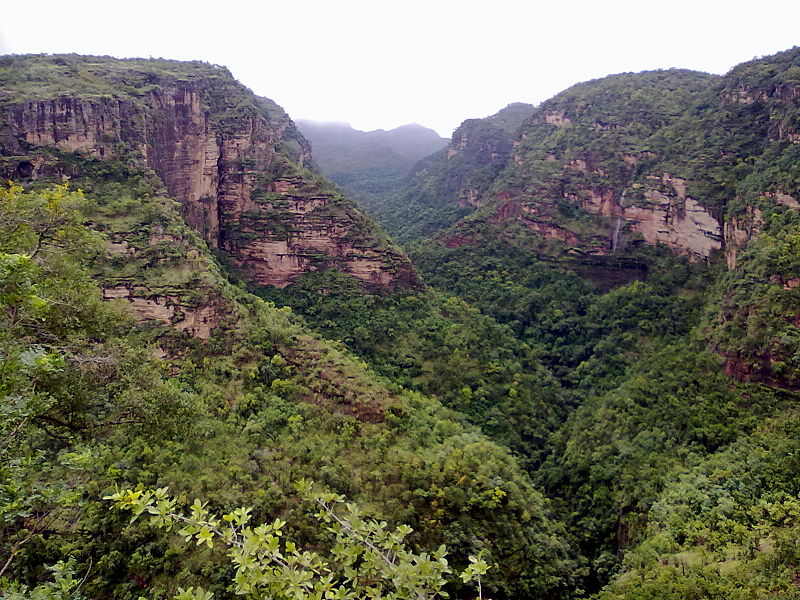
 the natural training of a hardy and rough life along with the Bhils who inhabited the wild region. From his Bhil friends, early in life, be learnt wrestling and swimming. He also became more skilled with the bow and arrow. He learnt to throw the Bhala or Javelin, to shoot straight, to ride and use the sword, in all of which he became proficient.
 From his childhood, he remained a devotee of Hanuman throughout his life, and had a very strong Pehelwan(wrestler)-like body.
He was even called Bhimsen or Bhim Dada later. After the early education in Jhabua, he was sent to the Sanskrit Pathashala at Varanasi, where a near relative of the family, probably maternal uncle was then living. He returned home after a few months and he was admitted in the local school at Alirajpur. Again his father sent him to Benares for the boy exhibited a strange waywardness.
This time he remained there and studied properly. On the whole, he was an average student. Political Initiation From the very outset, he had a deep aversion for study which was of no real but to simply churn out quill drivers or babus for the use of the British Raj in India. His stay at Benares however had a salutary effect upon his life, for he came in contact with many young men and ideas.
The atmosphere was such that he got the opportunity of studying many things, especially the unhappy events which were then happening in the country. Bit by bit, his mind was being drawn to the political situation of the country. Young Chandra Shekhar was fascinated by and drawn to the great national upsurge of the non-violent, non-cooperation movement of 1920-21 under the leadership of Mahatma Gandhi.
It is during this time, when the Jallianwala Baag massacreby British Army took place in Amritsar where hunderds (at least 2000) unarmed, peaceful and unwarned civilians were fired upon. This event had a profound effect on Indian national movement and inspired several young Indians, like Azad, into political movement for liberation. The young mind of Chandrashekhar was wax to receive and marble to retain.
From Chandrashekhar Tewari to Chandrashekhar ‘Azad’
To protest the massacre and demanding the liberation, various popular activities sprouted up throughout the country. While participating in one of these movements, Chandra Shekhar was arrested when he was just 16 years of age.
He was brought to court. The Magistrate asked him, “What is your name? Where do you live? What is your father’s name?” His answers were going to become very famous. He gave his name as ‘Azad’, his father’s name as ‘Swatantra’ and his place of dwelling as ‘prison cell’. Astonished was the Magistrate at these straight and bold answers. Azad was sentenced to fifteen canes. He was beaten very severely. At every beat, his body turned blue and red and blood oozed out freely. Azad was highly honored by the citizens and profusely garlanded when he came out from jail. His photos appeared in the Press with streamlined captions. From here on, he would be known far and wide as ‘Azad’, forever.
After this incident, Shri Provesh, the chief organiser of the Revolutionary Party in India, sought him and persuaded him to join it. Azad proved to be a restless worker. He issued secretly and silently, many leaflets and bulletins to drive away the misconceptions entertained by the people of the country. He proved a master propagandist. In physical strength, none equaled him and he was called Bhim Dada. Other eminent members of the party working along with Azad were Shri Yogesh Chatterji, Shri Sachin Sanyal and Shri Rabindranath Kar. Men in the party learned all the arts of modern warfare. The main problem was finance. Finances! From where could the money be had? This was the major issue before the party. To ask openly was impossible and to obtain it secretly was a much more difficult task.
Kakori Case 
The leaders of the party toured extensively in the land and collected a lot of money but it proved inadequate for the purposes of the contemplated actions. The leaders of the party sought the help of Azad. A secret commission was called and it decides in favour of dacoity of Government treasure. Verily it was a verdict and the men of the party started preparations for committing it somewhere. Result was the famous Kakori Case. Kakori is a railway station near Lucknow in Uttar Pradesh. The idea of the Kakori train robbery was conceived in the mind of Ram Prasad Bismil, while travelling by train from Shahjahanpur to Lucknow. At every station he noticed moneybags being taken into the guard�s van and being dropped into an iron safe. At Lucknow, he observed some loop holes in the special security arrangements. This was the beginning of the famous train dacoity at Kakori.
As per the plan, on August 9, 1925 members successfully looted the No. 8 Down Train from Shahjahanpur to Lucknow by stopping it at a predetermined location and holding the British soldiers at gun point. Just 10 young men had done this difficult job because of their courage, discipline, above all, love for the country. They had written a memorable chapter in the history of India’s fight for freedom. These revolutionaries were Ramaprasad Bismil, Rajendra Lahiri, Thakur Roshan Singh, Sachindra Bakshi, Chadrasekhar Azad, Keshab Chakravarty, Banwari Lal, Mukundi Lal, Mammathnath Gupta and Ashfaqulla Khan.
After this event, the Government let loose a period of repression, search and arrests in the country. Many revolutionaries were arrested. After deliberations of 18 months, the court awarded punishments. Four of the members –Ramaprasad Bismil, Ashfaqulla Khan, Rajendra Lahiri and Roshan Singh were sentenced to death; the others were given life sentences. Sad was the outcome of this whole operation for it lost its best and powerful men in the scramble. However Azad remained at large, never to be captured by British, and to continue doing the revolutionary struggle. During the next phase of the struggle he menored a whole team of revolutionaries to shake the British Raj
Untired Revolutionary Organizer
Azad disguised as a Sadhu, came to Jhansi and from there via Khandwa came to Indore. For a few days he went to his birthplace Alirajpur but did not stay there for long. Again he came back to Indore and after staying there in disguise for sometime, he left Indore. For some time, he also remained hidden in a hanuman temple as a priest.
Taking a circuitous he traveled across the trackless jungle of the Vindhya valleys on foot. This was the hardest period in his life and he had to undergo many hardships. The sun scorched him by day and the cold chilled him by night. He was often at a loss to obtain food for himself.
He at last reached Kanpur where the headquarters of Hindustan Socialist Republican Army was set up, which Azad had to re-organize. This was the first task to fill the vacuum of leadership with capable youth. At this time, he came in contact with the ablest and devoted men who wanted to overthrow the British Government by armed revolution. Incidentally, he met at Kanpur, Shri Bhagat Singh, Shri Rajguru and Shri Batukeshar Dutta.
The henchmen of the British Government were on the track of Azad. When a secret conference was being held between these men in a private lodging, the police all of a sudden rushed to the scene. A regular scuffle ensued and a party member named Shri Shukla met the assault single handed and was killed on the spot. Others, however, very skillfully managed to escape. Azad had in mind to teach a lesson to the intruders and on this particular occasion, he felt an overwhelming temptation to shoot but was held back.
Convocation of all the revolutionary leaders from different provinces of India was held in Delhi in September, 1928, near the old fort. Leaders from all over India took a serious review of the political situation in the country and decided on a course of action. Policy of “One for One” was decided in the terminology of the revolutionary organizations. Then, all of them departed to their respective provinces. It is rather difficult to know about the resolutions of meeting now.
Avenging the killing of Lala Lajpatrai
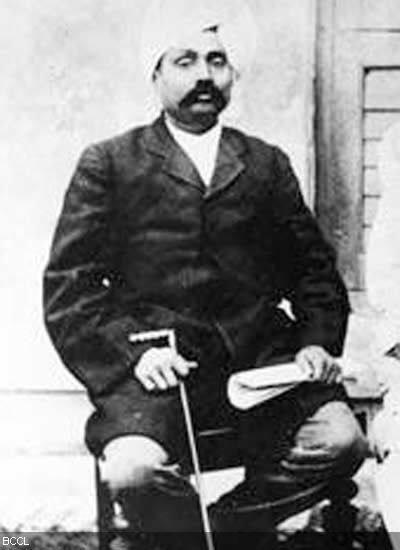
Hardly, had the leaders time to arrange their regional teams in order, than a serious situation arose in the country. Lala Lajpatrai, the ‘Lion of Punjab’ led a strong protest against the Simon commission in Lahore. The police with inhuman brutality charged the leaders with lathis. Lalaji was struck. It proved a deadly blow and later lies succumbed to his injuries. While dying he said, “The blows I got are but the death-knells of the British Empire in India”.
No sooner did Azad hear of this dastardly crime, then he turned black with rage. He rushed to Lahore and conferred there with his friends. Suitable action to avenge the insult was planned. It seemed to Azad that even his life would be too small a price to pay for the action. Selecting a few of his trusted followers, he explained to them the plan of his action and gave necessary instructions.
As previously arranged, this operation was directed by Chandrashekhar Azad, Rajguru, Bhagat Singh and Jaigopal. All these chiefs remained in hiding behind the Police Office in Lahore. As soon as Scott and Saunders came out, a volley of bullets struck them. Saunders was killed and Scott saved himself. Thus, Lalaji’s death was avenged.
Martyrdom
Once again, Azad was never captured. Vigilant police of the British rule in India were on the look out for Azad. All attempts to catch him proved fruitless. There are numerous stories related to Azad�s hide and seek with British Raj during these days. He was an expert in using camouflage, which he used on various occasions. His stories of escaping the British police became the talk of common household. Police were bewildered and tired.
At long last came the fateful day. On February 27, 1931 Azad was hiding in Alfred Park of Prayag, Allahabad in Utar Pradesh, waiting for a colleague for a secret meeting. Police had the clue and a successful net was drawn around the park. There are some unconfirmed and somewhat controversial accounts of one of his comrades having been a traitor and police spy.
Anyways, police laid down a cordon with a troop of 80 sepoys to surround the Alfred Park and started fire. He only had a short range pistol with him and limited bullets. For quite sometime he held them at bay single-handedly with a small pistol and few cartridges.
Fighting back bravely, he used the bullets to only target the british sepoys. In the end, Left with only one bullet, he fired it at his own temple and lived up to his resolve that he would never be arrested at the hands of British. He used to fondly recite a Hindi sher, probably his only poetic composition:
‘Dushman ki goliyon ka hum samna karenge,
Azad hee rahein hain, Azad hee rahenge’

Monday, July 22, 2013

NASA to echo Sanskrit in space, website confirms its Mission Sanskrit

nasa, echo Sanskrit, mission sanskrit, Rick Briggs,  sanskrit at NASA, sanskrit as computer language, sanskrit advantages, learning sanskrit

Very soon the traditional Indian language Sanskrit will be a part of the space, with the United States of America (USA) mulling to use it as computer language at NASA. After the refusal of the Indian Sanskrit scholars to help them acquire command over the language, US has urged its young generation to learn Sanskrit.

On visit to Agra, Aurobindo Foundation (Indian Culture) Puducherry Director Sampadananda Mishra told Dainik Jagran about the prospects of Sanskrit. Mishra said, “In 1985, NASA scientist Rick Briggs had invited 1,000 Sanskrit scholars from India for working at NASA. But scholars refused to allow the language to be put to foreign use.”

According to Rick Briggs, Sanskrit is such a language in which a message can be sent by the computer in the least number of words.

After the refusal of Indian experts to offer any help in understanding the scientific concept of the language, American kids were imparted Sanskrit lessons since their childhood.

The NASA website also confirms its Mission Sanskrit and describes it as the best language for computers. The website clearly mentions that NASA has spent a large sum of time and money on the project during the last two decades.

The scientists believe that Sanskrit is also helpful in speech therapy besides helping in mathematics and science. It also improves concentration. The alphabets used in the language are scientific and their correct pronunciation improves the tone of speech. It encourages imagination and improves memory retention also.

Mishra told the daily that even the call centre employees are improving their voice by reading Sanskrit, besides the language being used by news readers, film and theatre artist for alternative voice remedy